Your Hands Are Tools, Too: A Safer Approach to Making Art

Making art can get wonderfully messy. Here's why I've become more careful about what gets on my hands, along with a few simple ways you can protect yours, too.
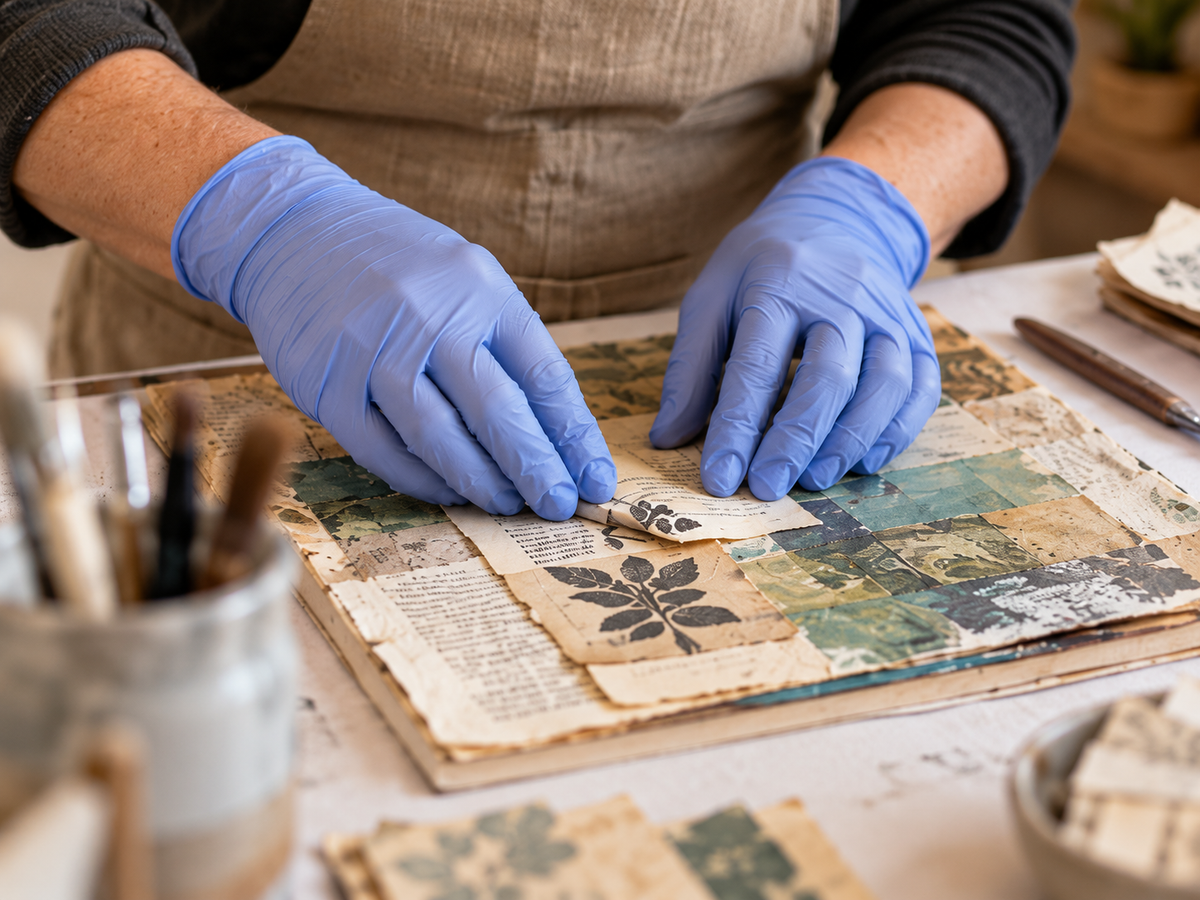
If you've watched any of my art videos, you've probably noticed something: I wear gloves. A lot.
But isn't getting paint all over your hands practically a requirement for being an artist?
There's something wonderfully satisfying about spreading paint across a surface, smoothing down collage papers, or blending colors with your fingertips. And those paint-stained hands at the end of the day? They're practically a badge of honor.
But I've become more thoughtful about what I'm exposing my skin to, especially since I work with so many different materials. Just because something is safe to use for making art doesn't necessarily mean it's a good idea to wear it on your skin.
Water-Based Doesn't Necessarily Mean Skin-Safe
Acrylic paints are a perfect example. Because they're water-based and relatively easy to clean up, it's tempting to assume they're completely harmless. And while many acrylic paints are considered relatively low-risk when used as intended, that doesn't mean they're formulated for direct or prolonged skin contact.
Depending on the manufacturer and formulation, acrylic paints and mediums can contain pigments, preservatives, binders, and other additives that may irritate the skin or trigger allergic reactions in susceptible individuals.
One ingredient worth knowing about is methylisothiazolinone (MI), a preservative used in certain water-based products. MI is a known skin allergen, and some people develop sensitivities after repeated exposure.
Now, before you start worrying about every accidental paint smudge, there's no need to panic! Getting a little acrylic paint on your finger occasionally isn't the same as deliberately using your hands as paint applicators every afternoon.
The issue is repeated, unnecessary exposure. Fortunately, that's something we can do something about.
Your Skin Might Have Something to Say About It
Have you ever finished a creative session and noticed that your hands felt unusually dry? Or perhaps you've experienced redness, itching, or irritation after working with a particular material.
There are a couple of reasons this can happen.
- Irritant contact dermatitis occurs when repeated exposure to substances such as paints, adhesives, soaps, and cleaning products damages the skin's protective barrier. Interestingly, sometimes all that washing and scrubbing we do to get our hands clean contributes to the problem.
- Allergic contact dermatitis is different. It occurs when your immune system develops a sensitivity to a particular substance. What's surprising is that you can develop an allergy to something you've used for years without any problems.
That's one reason I've become more intentional about protecting my hands. I don't want to discover, after years of happily making art, that I've developed a sensitivity to one of my favorite materials.
The good news? You don't have to become an expert in chemistry to make better decisions in your studio. A few simple habits can go a long way.
Five Simple Ways to Protect Your Hands
These are practical changes you can make without turning your creative space into a science laboratory. Most are inexpensive and easy to incorporate into your routine.
1. Keep a Box of Gloves Handy
I like having disposable gloves within easy reach whenever I'm working with messy materials. For many water-based painting and collage activities, well-fitting, powder-free nitrile gloves can be a useful option. They're flexible enough for detailed work, and I don't have to stop every five minutes to wash paint off my hands.
Some helpful tips:
- Buy gloves that actually fit. Gloves that are too large make everything feel clumsy, while gloves that are too tight become uncomfortable during longer creative sessions.
- Remember that different chemicals require different kinds of protection. If you're working with solvents, resins, varnishes, or strong cleaners, check the manufacturer's safety recommendations to make sure you're using the appropriate gloves.
- If your hands get hot and sweaty, take a break. Wash and thoroughly dry your hands before putting on a fresh pair. And if you notice irritation while wearing gloves, don't automatically assume your paint is responsible.
- Some people are sensitive to chemicals used in glove manufacturing. Alternative products, including accelerator-free gloves, are available for people with certain sensitivities.
- Change disposable gloves when they become damaged or contaminated inside. They're not intended to be washed and reused.
2. Give Your Fingers a Few Helpful Substitutes

There are plenty of tools that can accomplish the same thing as my fingers. In fact, some have become favorites because they produce interesting effects I wouldn't have discovered with my fingers.
One of my favorite things about making art is discovering an unexpected use for an ordinary object. Sometimes a practical solution turns into a creative discovery, and that's a pretty nice bonus.
-
Silicone brushes and shapers: Wonderful for spreading mediums, creating texture, and blending.
-
Palette knives: Excellent for moving paint around and creating interesting surfaces.
-
Old gift cards: Perfect for scraping, spreading, and smoothing.
-
Brayers: Great for gel printing and applying paint across larger surfaces.
-
Collage spreaders: Handy for smoothing papers and working out bubbles without getting adhesive all over your fingers.
3. Be Kind to Your Hands When Cleaning Up

We've all done it. You finish creating, look down at your hands, and realize you've accumulated approximately seventeen layers of paint, glue, and who-knows-what. Time for some serious scrubbing!
Except that's not necessarily the best approach. Repeated aggressive washing can damage your skin's protective barrier, making irritation more likely.
I also try not to leave paint on my skin to dry just because it's easier to deal with later. Cleaning up before everything hardens is usually much kinder to your hands.
A few better habits include:
-
Wash ordinary water-based paint off promptly with gentle soap and water.
-
Avoid harsh scrubbing whenever possible.
-
Never use paint thinner or other studio solvents to clean your skin.
-
Dry your hands thoroughly after washing.
-
Apply a gentle, fragrance-free moisturizer afterward.
4. Get Curious About What's in Your Supplies
You don't need to memorize ingredient lists, but it's worth knowing a little about the products you use regularly. This is especially important for mixed-media artists because we tend to work with such a remarkable assortment of materials.

Most manufacturers provide something called a Safety Data Sheet (SDS). Think of it as the behind-the-scenes information about a product, including potential hazards, recommended protective equipment, and what to do if something goes wrong.
You can often find these sheets on the manufacturer's website. For a quick safety check, look at:
-
Section 2: Potential hazards
-
Section 4: First-aid recommendations
-
Section 8: Recommended protective equipment
One thing worth remembering is that products within the same category can have very different formulations. Two acrylic mediums might behave similarly in your artwork but contain different preservatives or additives.
And a product labeled non-toxic isn't necessarily intended for use on your skin. When in doubt, check the manufacturer's recommendations.
5. Make Your Studio a Little More Skin-Friendly
You don't need an elaborate safety setup. A few thoughtfully chosen supplies can make a real difference, especially if you keep them close enough that you'll actually use them.

My Simple Studio Safety Kit
-
Comfortable, appropriately selected disposable gloves
-
Silicone tools, palette knives, and other paint applicators
-
I like Meyer's hand soap, but my favorite gentle hand soap is Scrubby Soap by Dixie Belle Paint
-
Fragrance-free hand moisturizer
-
An apron or protective sleeves
-
Safety glasses for activities with a splash risk
-
Easy access to product safety information
And here's one more habit worth developing: keep snacks and drinks away from your active work area. It's surprisingly easy to transfer materials from your hands, gloves, or work surfaces to something you're about to eat.
A Little Challenge for Your Next Creative Session
Here's something I'd love for you to try.
The next time you sit down to make something, pay attention to how often your hands come into direct contact with your materials. Are you spreading gel medium with your fingers? Holding down a paint-covered stencil? Cleaning excess glue off your hands? Wiping paint onto your jeans? (No judgment. We've all been there.)
Now ask yourself: Could I accomplish the same thing with a simple tool or a pair of suitable gloves?
You don't have to change everything about the way you work. Just pick one habit and experiment with an alternative. You might discover that keeping your hands a little cleaner makes the entire creative process more enjoyable.
And who knows? You might even discover a new favorite technique along the way.
Keep Making Beautiful Messes
One of the things I love most about mixed-media art is the freedom to experiment. I enjoy combining unexpected materials, discovering new textures, making mistakes, and occasionally creating a spectacular mess in the process. I wouldn't trade that freedom for anything.
But I've also come to realize that taking care of ourselves is part of sustaining a creative life. Our hands do remarkable things. They tear paper, mix colors, turn pages, hold brushes, arrange tiny treasures, and transform ordinary materials into something entirely new.
I'd like mine to keep doing all of that for years to come.
So I'll keep wearing my gloves when the situation calls for them, reaching for my palette knives, and finding new ways to make wonderfully messy art. And I hope you'll take good care of your hands, too.
I'm curious: Are you a gloves-on artist, or do you prefer getting your hands right into your work? Have you discovered any clever tools or tricks for keeping the mess under control? I'd love to hear what works for you!
Happy creating!